Pages

Sunday, June 10, 2018

Animal Mimicry and Camouflage

s it a twig or an insect? A harmless moth or a scary owl? Animals have amazing tricks up their sleeves to protect themselves, take advantage of looking like another creature or looking like their environment.

There are many types of animal mimicry. One example is an animal that pretends to be a totally different animal, usually much larger and stronger one, to scare off predators. The pattern on the wings of an Owl Moth (photo above) resemble the eyes and face of an owl. 

Stock Images of Mimicry in Nature

dead-leaf-katydid.png

Camouflage, where an animal resembles it's surrounding to hide from predators, is a much-studied type of mimicry. The Dead Leaf Katydid is a beautiful example. It looks just like the dead leaves it lives on. Other animals look like rocks, thorns, twigs, flowers and even bird droppings.

The King Snake, which is non-poisonous, has a scale pattern like that of the Coral Snake, a type of venomous snake. It tricks predators into thinking they have encountered its very dangerous relative.

snakes.jpg

Animal mimicry is found through the animal and even the plant world. One of the most amazing examples is the octopus, which can change not only its color but also its skin texture within seconds to hide in a variety of underwater environments.

Additionally, the mimicking species may smell, sound or act like the creature or object it is copying. 

Greeting Cards, Mugs, and Other Mimicry Custom Gifts


  • allyouneedisbiology.wordpress.com
  • bbc.co.uk
  • wikipedia.com

Tuesday, June 5, 2018

Lower Back Pain? You're in Good Company


If you have lower back pain, you are in good company. According to researchers, more than 80% of all Americans will suffer from lower back pain at some point in their life. One of the reasons it is so widespread is that this pain can be caused by many conditions, some not even related to your back.

The back is a complex framework of joints, bone, muscles, and ligaments, that must coordinate to do their work. The lower back supports your upper body and provides sensation and power for movement of hips, legs, and feet. Your back also houses and protects your spinal cord.

Stock Images & Video About Lower Back Pain

This complexity makes your back susceptible to injury and disease if not properly cared for. Muscles can be pulled, sprained, become inflamed or even torn. Bones can fracture or break. The nerves protected inside your spine may swell or get pinched. There are numerous medical conditions that may contribute as well, such as arthritis, lumbar spinal stenosis, sciatica, osteoporosis, scoliosis or herniated discs. 

Your lower back may be perfectly healthy, but you may give yourself lower back pain through your actions. Take a fall, slouch, lift a heavy object, or carry too much weight and your back may be in pain.

Most frustrating of all is that lower back pain may be caused by something other than your back; this is called referred pain. Tumors, kidney infections, endometriosis, fibromyalgia are likely medical culprits.


Tote Bags, Mugs, Blankets and Other Lower Back Pain Gifts

But do not fear, there are a number of things you can do to prevent or minimize the odds of suffering from lower back pain. Exercise and maintaining a healthy weight are at the top of the list. Don't smoke because it restricts blood flow to your spine. Practice proper posture when sitting, standing and lifting.

If you do get lower back pain, it often clears up after a few days or weeks. To be on the safe side, always check with your doctor.

  • Lower Back Pain, Symptoms, Diagnosis & Treatment, spine-health.com
  • Tips for Pain Relief, webmd.com
  • Chronic Low Back Pain on the Rise, med.unc.edu

Monday, June 4, 2018

Alzheimer's Disease, a Tragic Future for Our Aging Population

An estimated 82 million people will have dementia by 2030, according to the World Health Organization. By 2050, the number of people with dementia in the U.S. will be double what it is today, and 80% of these individuals will have Alzheimer's Disease.

Alzheimer's is a noncurable condition that causes problems with memory, thinking and behavior. A person can have the beginnings of Alzheimer's for years without any visible symptoms. It progressively worsens over time and never improves.

Most people develop Alzheimer's after age 65, although some people may get Early-Onset Alzheimer's decades earlier. 

The greatest factors in getting Alzheimer's is aging and having Alzheimer's in your family. High blood pressure, high cholesterol, and diabetes also increase the odds. Head injuries and not sleeping regularly contribute to a lesser degree as well.

At first, symptoms may not be very noticeable. Misplaced keys, a lost book, a missed appointment. After all, everyone forgets things on occasion. However, with those suffering from Alzheimer's Disease, memory loss and confusion become more frequent, eventually interfering with daily living. They will also exhibit bouts of unexplained anger, depression and mood swings. Usually, close family and friends are the first to notice that something is not right.

In the long run, a patient suffering from Alzheimer's will need care 24 hours a day. They will not recognize family, will forget basic vocabulary, and not know how to feed themselves or accomplish even the most basic day-to-day tasks without assistance.

The brain of an Alzheimer's patient deteriorates due to the development of a type of plaque in brain cells called beta-amyloid, as well as tangles in nerve cells called tau. 

Treatment is limited, as there are only 5 drugs available that slow the progression of memory loss but do not stop it. Sleep drugs, anti-depressants and other mood enhancing drugs are usually prescribed to deal with common symptoms.

We have no way to cure Alzheimer's, nor to restore parts of the brain that have been lost. 

Luckily, there are many new drugs in development. Researchers are working on drugs to slow the deterioration of brain cells. Some hope to develop drugs that may one day even prevent Alzheimer's altogether. 

If pharmaceutical companies are successful, there may be a much brighter future for the elderly and the world may never reach the 82 million patients currently expected to develop this terrible disease.


Stock Images & Stock Video About Alzheimer's Disease

  • alz,org
  • webmd.com

Friday, June 1, 2018

Plastic Pollution in Our Oceans: Stock Photography

While plastic has given much to modern society, like inexpensive products and durable packaging, it's also had disastrous consequences.

A recent study from Georgia University found that 18 billion pounds of plastic are dropped into the ocean each year. This has resulted in massive islands of waste forming at sea that destroy aquatic life and poison the water. One such island in the Pacific now equals the size of Texas.

Stock Images of Our Polluted Oceans

The chemicals in plastic often enter into fish's stomachs, making them potentially harmful to the animals that eat them, including people. "I don’t think we should be waiting for a key finding of whether or not fish are hazardous to eat,” says biologist Richard Thompson. “We have enough evidence to act.”

Georgia University reports that only a fifth of all plastic is ever recycled. The problem lies mostly in developing nations but extends globally. Major cities often create landfills by waterways where plastic blows out onto the water and eventually out to sea.

Ocean Wall Art

“Everyone is looking for a sexy answer," Ted Siegler, a resource economist, remarks. “The reality is, we need to just collect the trash."

Hope lies ahead, as countries develop more efficient systems of recycling, but in the meantime, Mother Nature is left paying the lofty price.

Find out how you can help at Earthday


  • nationalgeographic.com
  • earthday.org

Thursday, May 31, 2018

Biometrics

Imagine never having to remember a password or enter a PIN number again. Your phone, computer, bank account and even your own front door will all be able to recognize you through the use of biometrics. Your fingerprints, ears, voice, face, iris, retina, gait and even your distinct odor can already be used to identify you.

As convenient as it sounds - since you will always have your body with you - some are concerned about the potential for invasion of privacy and also the possibility of security breaches.

Stock Images About Biometrics

If a hacker steals your password, you can create a new one. But, if the computer storing your biometric data is hacked you cannot get a new ear, iris or voice. And since biometric security opens many doors, literally and figuratively, hackers may be able to gain much more than with a single password.

Privacy advocates warn this may be the beginning of Big Brother watching you, and not just online. Facial recognition software can pick an individual out of a football stadium full of people. Security cameras are already prevalent in public places, making it possible for you to be followed by the police, the government,  companies, and hackers. This can happen as you walk down the street, shop, bike, or do anything where security cameras are located.

You may say, "I'm not going to hand over my biometric data to anyone." Well, the truth is you may already have done so.

Touch ID on cell phones and voice-controlled assistants such as Alexa or Echo collect your fingerprints and your voice print. Social media sites such as Facebook already use facial recognition software to label photos of you and your friends. Even your iris can now be scanned from up to 30 feet away without you being aware.

Biometric Coffee Mugs, Beach Towels and more

In short, it looks like biometrics is here to stay as a method of identification and for use in security. One can only hope that those with the data do the best they can to keep your personal face, ear, eye, and other biometric information safe from hackers.  


  • theatlantic.com
  • engadget.com
  • wired.com
  • scientificamerican.com

Saturday, May 19, 2018

Invincible Water Bears


Although they can survive unprotected in outer space, these resilient creatures are terrestrial living beings, not aliens as some have claimed. They are found on every continent on planet Earth and they love the water, yet can be found in the desert as well.

First discovered by pastor and zoologist Johann Goeze in 1773 and later named Tardigrada (Italian for "slow stepper"), these creatures still fascinate scientists today.

Images & Video of Tardigrades

It's unlikely that Goeze knew how amazing tardigrades (also called water bears) really are. They can withstand a high temperature of 300 degrees and a low of -458 degrees F. They have also survived outer space, radiation, and six times the pressure of the deep sea.

How do they do this? When faced with adverse conditions they can desiccate - dry up - themselves. When in this state they are referred to as 'tuns' and resemble a little ball. It is a death-like state called cryptobiosis. Water bears usually only live a few weeks or months but can be revived from a state of cryptobiosis after 30 years.

Water bears need at least a small film of water to be in their normal mobile state. They suck water from the moss and plant matter they usually live in. They prefer living in the moist sediment in the bottom of lakes but have been found in arid regions as well. As long as there is just a little water, they can thrive.

Cute Water Bear Throw Pillows

Even though human beings might not survive a catastrophe such as a supernova or asteroids, it seems that water bears will be around many millennia after we are gone.


Alina Bradford, Tardigrade Facts, livescience.com
William Herkewitz,  Secrets of the Water Bear,  popularmechanics.com
wikipedia.com

Monday, May 14, 2018

Volcanic Eruptions: Kilauea and Beyond


A wall of lava flows down Hoʻokāpu Street on Hawaii's Big Island, engulfing cars and setting trees ablaze – one of many scenes of havoc following the eruption of Kilauea in May.

Deriving their name from the Roman god of fire, Vulcan, volcanoes live up to their reputation as one of nature's most fearsome phenomena. Literally openings in the earth's surface, volcanoes exist throughout the world, including underwater. 

Images & Video of Kilauea and Other Volcanos

Volcanoes usually occur where tectonic plates separate but they can also arise from hot spots in the earth's crust, such as in the Hawaiian Islands and Yellowstone National Park. When pressure builds up and travels to the earth's surface, an eruption occurs that can last between one hour and hundreds of years. The Island of Stromboli's volcano has been continuously active for over 2,000 years.

In addition to lava, ash and fire, eruptions are often accompanied by earthquakes, mudslides, and acid rain, causing massive damage to the surrounding environment. The 1980 eruption of Mount St. Helens destroyed 200 houses, 15 miles of highway and 4 billion board feet of timber.

Volcanic eruptions are not solely destructive, however. The lava they produce can clear away brush and treat the soil, making the land highly fertile for new plants and agriculture.

Custom Gifts for Science Geeks

  • nationalgeographic.com
  • bbc.com

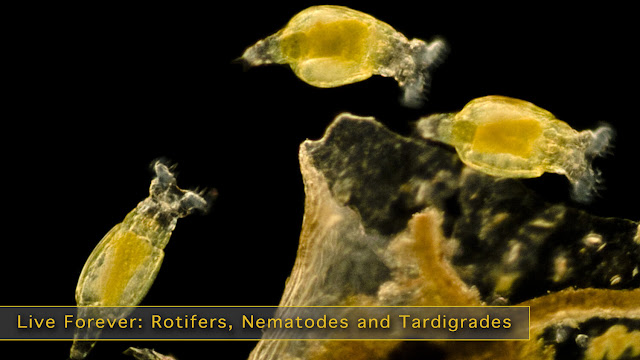
Rotifers, Nematodes and Tardigrades Stock Microscopic Photography

 Roti fers (Philodina sp.), Light Micrograph The bdelloid rotifer, found in freshwater habitats all over the world, is able to withstand ex...